Who they were
A tavern,
a mother,
a daughter
Vi Childs did not become a performer until she was thirty-four. Darby was already playing Seattle bars on guitar before she was twenty-one. Together they turned a run-down pub in a logging town into the funniest room in Washington — and almost nobody outside it ever saw the act.
Vi “Moon” Childs
The piano player
who couldn’t play
Violet Childs was born around 1928 and spent the first half of her adult life doing none of this. She was a Sunday School teacher at the Buckley Presbyterian Church and a worker at a Seattle meat plant.
Newly divorced and raising children alone, she walked into a bar one night and decided she wanted to play the piano for a living. She could not play the piano. A teacher turned her down. She taught herself.
Her first job was the Skyroom at Boeing Field, around 1962, and by her own account she was terrible at it — people took bets on how long she would last. She lasted two years, then went out on the road: bars in Juneau, St. Paul and St. Petersburg; the Epicure in White Center, where she drew record crowds for years; Diamond Jim’s; the Las Vegas lounges; the Rum House at the Galt Ocean Mile Hotel in Fort Lauderdale; Carnival cruise ships.
Somewhere in that stretch somebody handed her a microphone between songs, and the comedy started almost by accident. It never stopped.
Around 1980 she bought the 737 Main Pub in Buckley, Washington — a logging town of 3,200 people — and turned it into her own room for the next twenty years. She lived above it with her husband, Robert Griffith, who tended the bar. She played Friday and Saturday nights to a full house, worked the tables like Don Rickles, and pinned every sign and hat a customer handed her onto the wall until the room read like a joke book.
She was ribald and she knew it. “I swear. I’m risqué. And I have fun. I’m a tease and I tease everybody and people love me.”
She was still working the room at sixty-nine.
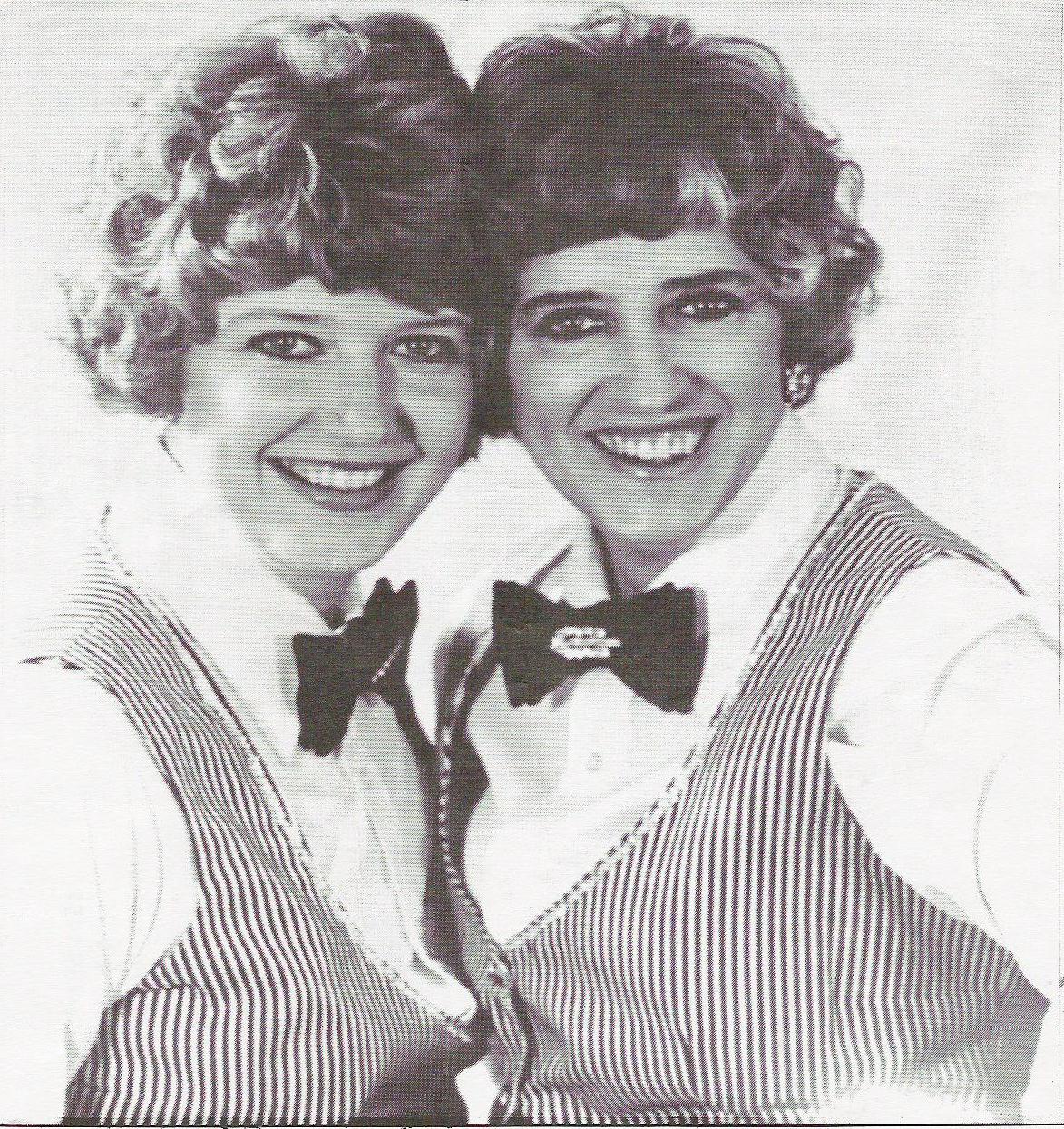
Darby Childs
The straight man
Darby was a performer before her mother was. She was playing guitar and singing in Seattle bars before she turned twenty-one, and had to stop when somebody worked out her age. She later hosted her own residencies — the White Stone on Aurora, the Carriage Room at the Blockhouse in Des Moines, and a six-week run at the Captain Cook Hotel in Anchorage.
It was Darby who found the bar. She told her mother about “a dumpy little bar” for sale in Buckley, and the two of them bought it.
Asked in 1982 how they rehearsed, Darby said they didn’t — there was never time. “But we’re the greatest of friends. We call each other every day, we ride bikes and pick blueberries together.”
She stayed on the stage because being up there made her feel part of the party. “My feet cry, my back aches,” she said, “but I love it.”
Who’s doing this
Fifty tapes in a box
This archive is run by Vi’s granddaughter — Darby’s daughter. The tapes were in a box: about fifty VHS cassettes, most of them unlabelled, recorded by whoever happened to have a camcorder that night.
The work is straightforward and slow. Each cassette gets played out to a file, transcribed end to end so it can be searched, read against the family’s own cataloguing rules, and cut into clips. One goes out a night.
The goal is simple: get all of it out of the box, and keep it somewhere that outlives any one platform.